It began with ₦20,000 for a hospital bill. By month four she owed seven apps at once. The agents called her pastor. They told her mother she was a fraudster.
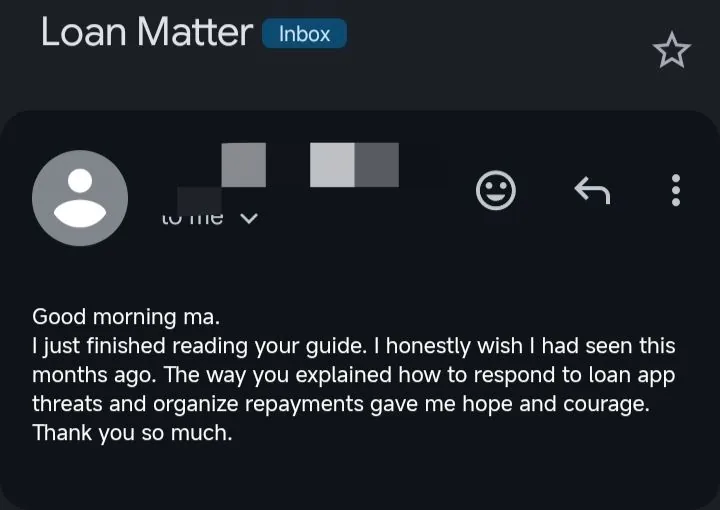
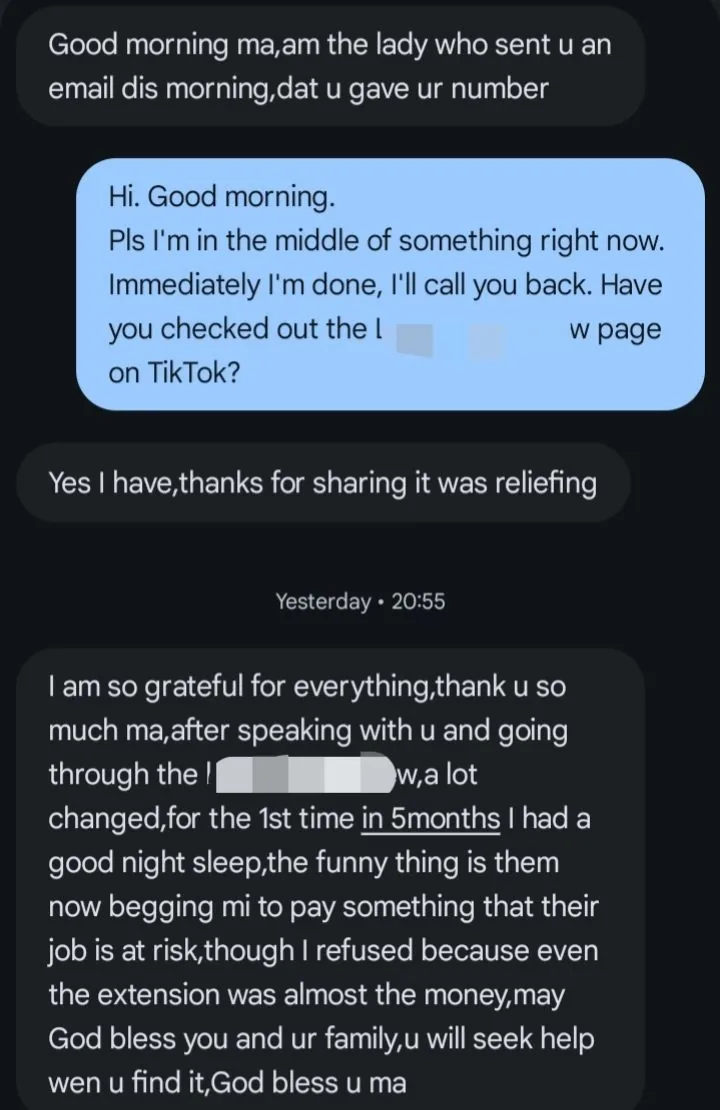
Two days after she got this guide, she sent me one message: “For the first time in 5 months, I had a good night sleep. They are now the ones begging me.”
Send me the guide — ₦4,500Instant PDF · 69 pages with the bonus · 14-day refund
Who I am, and why I made this guide — in my own words.
Tap to play
Her name is Confidence. It started with an emergency — her husband collapsed and the hospital wanted money immediately. She had nothing in her account.
She downloaded a loan app and borrowed ₦20,000, telling herself it was temporary. Six weeks later she borrowed from a second app to clear the first. Then a third. By month four she owed seven apps at the same time.
She sold her television. She sold her jewellery. She borrowed from relatives. The balance kept climbing anyway.
They called her pastor. They called her colleagues. They told her mother she was a fraudster. For five months she did not sleep through a single night.
Maybe your story started differently — rent, school fees, a business that needed capital, a salary that never stretched. Or maybe it started exactly like hers.
Whatever brought you here, you did not choose this. These apps showed up when you were desperate, made borrowing effortless, and then made leaving hard. That is not a character flaw. It is a system, and systems have exits.
“Money lands in four minutes. The repayment is due in fourteen days at a rate nobody explained. And the moment you miss it, your contact list stops being yours.” The mechanism, in one paragraph
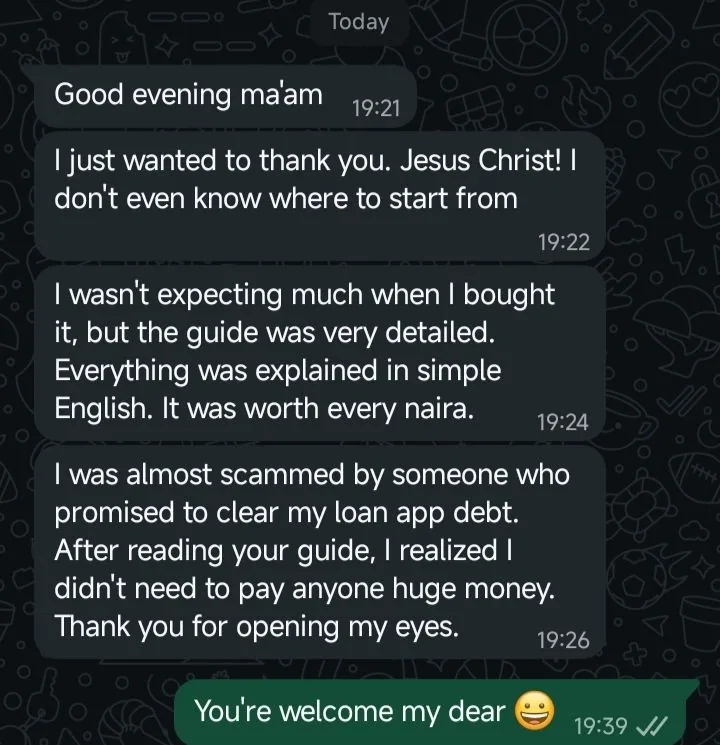
Confidence found this guide. Two days later she wrote to me. Not because a miracle happened — because for the first time she knew exactly what she owed, which apps had real leverage over her, and what to say when the phone rang.
That is the whole promise of this guide. Not magic. A sequence.
This is not motivational pressure. It is what the maths actually does to people who decide to deal with it next month.
Rollover fees and penalties are charged against the number on the screen, not against what you originally borrowed. That number does not sit still while you decide. It grows.
Every week you wait, more of your contacts get a message. It goes from two or three, to a dozen, to people you haven't spoken to in years. That list only ever gets longer. It never gets shorter.
Settlement conversations get harder, not easier. A lender with six months of silence behind you has no reason to accept anything less than the full inflated figure. The person who knows their rights in week one settles for less than the person who calls in month six.
Marriages strain. Jobs are lost to a message that reached the wrong person. People stop answering their phones entirely. None of this is dramatic when it happens. It is just what six more months of this looks like.
Every week you spend deciding costs more than the guide does.
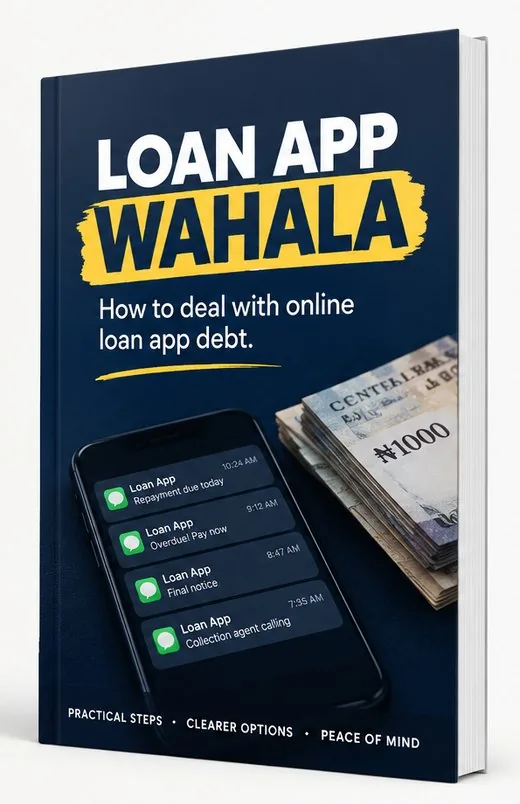
A 35-page guide, written in plain English, plus a complete 19-chapter bonus book. 69 pages in total. Not theory — documents you copy, fill in and send.
What to say when an agent calls — including the first ten seconds, which is where most people hand over control without realising it. Word for word, in English and in the tone Nigerian agents actually respond to.
A ready-made negotiation letter. You fill in your figures, send it, and put the request for a restructure in writing — which is the difference between a conversation and a recorded position.
For when they have already messaged your contacts. What to send your family, friends and colleagues — word for word — so you keep your dignity and take the story back from them.
Pre-filled templates for both regulators. One argues harassment and public shaming. The other argues unlawful use of your contact list. Most people only ever file one, which is why most complaints go nowhere.
The month you genuinely cannot pay anything. What to say so the pressure comes down without you making a promise you'll break.
How to earn from your phone so this never happens again. Included free, because getting out of debt and staying out are two different problems.
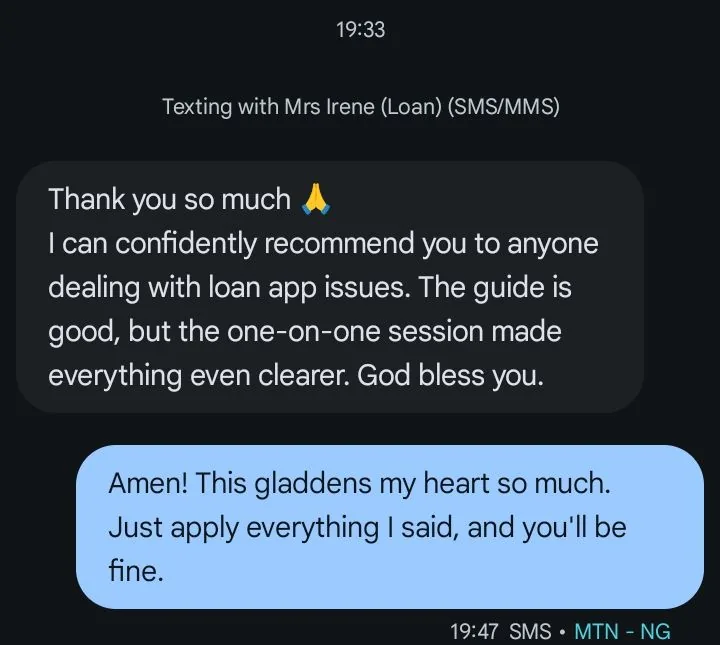
A free personal consultation with me after you buy. No upsell, no hidden charge. Plus optional access to a community of people going through the same thing.
Nigeria passed rules that specifically target what is being done to you. But the two bodies that can act on it do entirely different jobs — and filing with the wrong one is why people wait months for nothing.
Both filings are free, and you should make both. The guide gives you the exact wording for each.
But understand what a complaint is: it opens a case. It does not silence a phone at 11pm tonight. That gap — between filing and being left alone — is what the scripts in this guide are for.
By email, WhatsApp and SMS.
Results differ from person to person.
One payment, lifetime access, instant download. Less than what one loan app adds in late fees in a single week.
Send me the guide nowCard · Bank transfer · USSD — secure checkout on Nestuge
I reply myself. You don't need to buy anything to ask.
I would rather you not buy this than buy it and find out it wasn't for you.
You can, and you should use the free routes too — the FCCPC and NDPC complaints cost nothing, and this guide shows you how to file them properly. What free articles don't give you is the part that changes your phone tonight: the exact words for a live call, the settlement email, the message to send your contacts, and the order to deal with the apps in. That is what the ₦4,500 buys.
The main guide is 35 pages, written to be read in one sitting on your phone. The bonus adds a full 19-chapter book on social media monetization — 69 pages in total.
No. The guide was written for people in exactly that position, including people owing seven or eight apps at once. The sequence is designed for a stack, not a single loan.
The guide has a script for this. It can't un-send a message — nobody can — but it stops the next round, and it tells you exactly what to say to the people who received it. That conversation is usually far less bad than people fear, and doing it on your terms beats waiting for the next message.
The calls ease when your position changes — when you know what you actually owe, which apps have real leverage, and what to say when they ring. Confidence's message above arrived two days after she read it. Results differ from person to person, so I don't promise a specific outcome for you.
The guide includes a ready-made negotiation email. Outcomes differ between apps and between people, so I don't promise a figure.
There is a section for exactly that. What to say, what to put in writing, and what not to promise — so the pressure comes down without you committing to something you can't deliver.
No. An unpaid loan is a civil matter, and being unable to pay is not a crime. What is unlawful is the harassment — contacting your family, impersonating the EFCC, publishing your name. The guide shows you how to use the law that already protects you. It is education, not legal representation, so for a court matter you should see a Nigerian lawyer.
The guide covers it, including the difference between registered lenders — who may report to a credit bureau and can be negotiated with in writing — and unlicensed ones, who rarely sue because they would have to explain their own conduct to a regulator first.
A download link appears immediately after payment. It's a PDF, so you can be reading it on your phone within minutes.
Yes. No upsell, no hidden charge. Message me after you buy and we'll talk.
Please do. Message me on WhatsApp at 0815 110 4920 and I'll reply personally.
Or you can close this page and read it next week — after another payment date, and after another contact has been messaged.
Get the guide · ₦4,500Instant download · 14-day refund